Material Positioning Systems for Door & Window Accuracy
Door and window manufacturing has almost no room for error. A frame that's off by even a sixteenth of an inch can throw off a whole assembly, leaving installers fighting gaps, uneven reveals, or seals that won't sit flush. Most of that error doesn't come from bad machines — it comes from how the material was positioned before the cut was ever made.
That's the problem material positioning systems were built to solve. Instead of relying on a tape measure, a pencil mark, and an operator's steady hand, these systems move stock to an exact, programmed point before every single cut. The result is frame components, mullions, and sashes that actually match their spec sheet — not just close to it. Here's what precise stock alignment changes about the accuracy of finished doors and windows, and where the limits of that precision actually sit.

Why Alignment Matters More in Doors and Windows Than It Looks
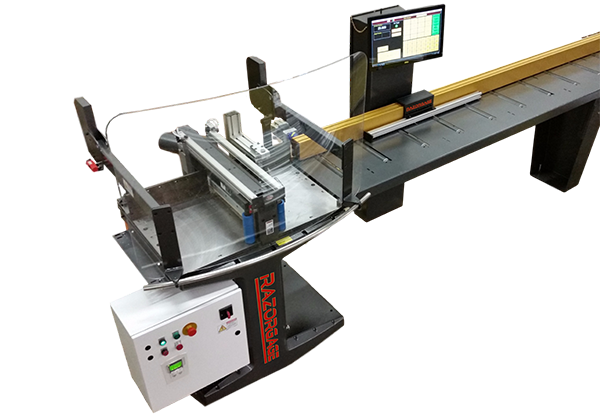
Door and window parts are unforgiving in a way that a lot of other cut stock isn't. A cabinet shelf that's a hair long can usually be trimmed or sanded down without anyone noticing. A window sash rail that's off by the same amount often won't seat correctly against its stile, and that mismatch shows up as a visible gap or a seal that fails years down the road.
This is why manufacturers in this industry lean so heavily on repeatable positioning rather than one-off precision. It's not enough for the first part in a run to be accurate — the hundredth part needs to match it exactly, since frame components are typically paired and joined with others cut hours or even days apart. A system built around consistent, programmed positioning holds that standard automatically, in a way that manual measuring struggles to sustain across a full shift.
How Automated Positioning Actually Improves the Cut
A material positioning system works by moving a stop or pusher to a precise coordinate before the saw or drill engages, removing the guesswork that comes with manual measuring. RazorGage's positioners are built around linear bearing rails and zero-clearance components similar to what you'd find on CNC equipment, which is part of why they can hold tolerances as tight as roughly ± .005 inch across thousands of repeated cuts.
For a shop exploring what this actually looks like on the floor, the broader automatic saw system lineup shows how positioning technology gets paired with different saw stations depending on the material and part type being run. The accuracy holds regardless of whether the system is being used as a stop or a pusher, which matters because window and door shops often run both stop-based chop cuts and pusher-fed upcut work in the same facility.
It's worth being clear-eyed about what this precision depends on, though. A positioning system can hit its programmed point exactly and still produce a bad part if the stock itself is warped, twisted, or inconsistent in cross-section — no amount of positioning accuracy corrects for material that wasn't straight to begin with.
Handling Complex Profiles Without Compounding Error
Window and door stock isn't always a simple rectangular blank. Mullions, sash profiles, and extruded aluminum framing often have irregular cross-sections, and cutting these accurately means the material has to be gripped and advanced without shifting or twisting mid-feed. Positioning systems designed for this work use intelligent clamping that grips evenly across the leading and trailing edge, which avoids the scrapped parts that come from a half-clamped board sliding during a cut.
This matters because complex profiles compound error fast. A slight misalignment on a straightforward rectangular rail might go unnoticed, but the same misalignment on an angled or profiled piece can throw off how it seats against its mating part. The trade-off is that these clamping and profile-handling features add setup complexity compared to a bare-bones stop, so smaller shops running very simple profiles may not need the full feature set.
Cut-List Accuracy and Digital Workflow Integration
Precise positioning only helps if the dimensions being fed into the system are correct in the first place, which is why most modern positioning systems integrate directly with digital cut lists rather than relying on an operator to key in numbers by hand. Files can be imported by USB, network, or Wi-Fi, sorted by job or material, and pulled up at the saw station without re-entering data that already exists in a design file.
This closes a common gap in window and door production, where a dimension can be correct in the original drawing but get transcribed incorrectly somewhere between the office and the shop floor. Digital integration doesn't eliminate human error entirely — someone still has to build the cut list correctly upstream — but it removes one of the most common points where a small mistake used to creep in.
Where Upcut Saws Fit Into the Accuracy Picture
Positioning is only half of the accuracy equation; the cut itself matters just as much. Many manufacturers pair their positioning systems with Upcut saws, which cut upward through the material rather than down through the top face. That orientation typically leaves a cleaner edge with less tearout, which matters on finish-grade window and door components where a rough cut edge either needs extra sanding or risks becoming a rejected part.
The combination of precise positioning and a clean-cutting saw is what actually delivers on the accuracy promise. RazorGage combines automated material positioning with advanced cutting solutions to help manufacturers achieve consistent, accurate cuts while reducing the risk of chipping and splintering. That said, blade condition and cutting speed still play a role in edge quality, so even a well-positioned cut can suffer if blades aren't maintained on a reasonable schedule.
FAQs
What is a material positioning system?
A material positioning system is an automated device that moves and holds raw stock at a precise, programmed point before it's cut, drilled, or otherwise processed. It replaces manual measuring with repeatable digital positioning, which is especially valuable for parts that need to match closely across a long production run.
How accurate are RazorGage material positioning systems?
Depending on the specific system and setup, accuracy can reach roughly ±.004 to ±.005 inch, and that level holds consistently across long runs rather than drifting the way manual measurements often do. Real-world accuracy still depends on factors like material straightness and proper calibration.
Why does alignment accuracy matter more for doors and windows than other woodworking?
Frame components need to seat tightly against mating parts to maintain seals and even reveals, so even small dimensional errors tend to show up visibly in the finished product. Other applications, like rough carpentry, often have more tolerance to absorb minor inconsistencies without affecting fit.
Can material positioning systems handle irregular or profiled stock?
Yes, systems designed for window and door work typically include intelligent clamping that grips evenly across a profile's leading and trailing edges to prevent shifting during the cut. This is important because profiled stock tends to amplify small positioning errors more than simple rectangular material does.
Do positioning systems eliminate the need for skilled operators?
Not entirely. They remove a lot of the manual measuring and guesswork that used to require years of experience, but operators still need to understand material selection, catch problems like warping before a cut, and manage cut lists accurately going in.


Comments
Post a Comment